⚜️ Bandikoot, Geno, and Buk are building Ghetto Oasis from the sounds, spaces, and culture that shaped them, while carving out something distinctly their own in Baton Rouge. ⚜️
Ghetto Oasis Is Building a Black Dance Music World of Its Own
Built through Baton Rouge’s underground electronic music community, Ghetto Oasis brings Bandikoot, Geno, and Buk together around a shared love of Black dance music and the sounds that have shaped each of them individually.
The trio first connected through Frequency, finding common ground in their taste, ideas, and goals while developing a sound that moves through Ghetto Tech, electro, club, bounce, jungle, drum & bass, breaks, techno, house, hip-hop, R&B, and other corners of Black electronic music. For Ghetto Oasis, those genres are not disconnected influences. They share histories and cultural roots that allow the three artists to move between them while still creating something cohesive.
Their individual identities become even clearer as the BPM shifts. Geno finds his pocket around 135 to 145 BPM, Buk pushes toward 160, and Bandikoot settles into the faster territory around 170. Together, they allow those differences to naturally collide, separate, and reconnect, creating sets that can travel considerably without losing the identity at their center.
We caught up with Ghetto Oasis’ (@freq.br) Bandikoot(@bandikoot999), Geno (@whoisgeno), and Buk, for NOLA EDM’s September feature to talk about the meaning behind the collective, Black dance music, building community in Baton Rouge, their individual approaches to DJing, the evolution of Ghetto Oasis, and what they are quietly working toward next.
NOLA EDM: For people discovering Ghetto Oasis for the first time, who are Bandikoot, Geno, and Buk individually, and how did the three of you come together as a group?
Ghetto Oasis: Geno or (whoisgeno) is a producer/ DJ who just loves black dance music through and through. Pulling my biggest influences and inspirations from Ghetto Tech, Electro, Club and Bounce.
We came together as a group through Frequency just having very similar taste, ideas and goals.
NOLA EDM: The name “Ghetto Oasis” already carries a strong identity. What does that phrase mean to the three of you now that it has grown from a description of Bandikoot’s sound into something shared?
Ghetto Oasis: Ghetto Oasis means exactly what it sounds like. Most people who did not grow up around predominantly black spaces or hearing regional black sounds would equate these sounds to very raunchy and harsh, where as this is an oasis for us this is what it sounds like when we are comfortable and embraced
NOLA EDM: Each of you comes into this with your own taste, influences, and approach to DJing. Where do your individual sounds overlap, and where do you intentionally let them stay different?
Ghetto Oasis: Our sounds all really overlap heavily around electronic music, specifically around like G Tech, but the higher and lower the BPM goes we all start to drift apart into our own unique pockets. I myself really dig deep around 135-145 bpm whereas Buk hits his stride at 160 and Bandikoot gets in his groove around 170. We naturally let them come together and drift apart on their own. For me it depends on what I am producing or listening to the most at the time
NOLA EDM: Ghetto Oasis feels rooted in jungle, drum & bass, breaks, club music, techno, house, hip-hop, R&B, and a lot of left-field energy. How do you decide what belongs in the world you’re building without making it feel scattered?
Ghetto Oasis: Really just drawing on our immediate influences and what we hear and listen to the most. The thing about all those genres is that they are made by and made for inner city black people so when pulling from those genres and inspirations it naturally feels connected and intertwined.
NOLA EDM: There’s also a visual and cultural side to the project that feels influenced by things like Adult Swim, video games, late-night television, and internet-era aesthetics. How important is that world-building outside of just the music?
Ghetto Oasis: World building plays a big part in what we are doing. I would say that what we are trying to build and portray is very important but the process that we go about doing it is not very intentional some of these things appear and come to fruition on their own and I think the best ecosystems for a sound or project happen with a balance of natural selection and intentional picks.
NOLA EDM: Bandikoot has talked before about DJing as storytelling and moving through different moods and BPMs. How does that philosophy change when the three of you are building energy together instead of playing completely separate sets?
Ghetto Oasis: It changes from more of a completely controlled mood to how beautiful can we make this plethora of noises sound while also seeing how far in each direction we can go.
NOLA EDM: Baton Rouge has a smaller electronic scene than New Orleans, but there’s clearly a strong community there. How has coming up in Baton Rouge shaped Ghetto Oasis and the way you think about creating your own space instead of waiting for one to exist?
Ghetto Oasis: We are literally the only people in Baton Rouge playing these types of sounds every single time we step out. So we have to stand on what we believe is cool to open up the scene to newer and broader sounds. The only way that happens is by not trying to only play safe and appease the crowd with only popular music. We try to present sounds that we know they will like but they just don’t know it yet.
NOLA EDM: What have each of you learned from the other two since working together more closely? Has being part of Ghetto Oasis changed the way any of you approach DJing, music discovery, or performance?
Ghetto Oasis: Working with Koot has really shown me that sometimes you can’t wait for shit to happen especially when building a scene from the ground up you gotta make spaces and create opportunities for what you are trying to do. He really boots on the ground looking for stuff we can do to push the movement forward every single day.
Working with Buk has shown me that there are people out there just like you and you just gotta not be bashful all the time and make new friends. Meeting him felt like meeting my literal twin. We have so much in common it’s crazy and that would have never happened if I didn’t play a freq last April.
NOLA EDM: A lot of underground collectives start with parties, but some eventually grow into labels, releases, visual projects, radio, merch, or something entirely different. What do you want Ghetto Oasis to become beyond the booth?
Ghetto Oasis: That will come with time. I can say for sure we are working on Music right now.
NOLA EDM: How has 2026 gone for the three of you so far? What moments, shows, opportunities, or personal milestones have made this year feel important for Ghetto Oasis?
Ghetto Oasis: For us as a whole we have had some crazy moments this year and stuff is still in the works. My favorites would have to be The New Years Eve show, FREQNIK at Chelsea’s, and playing at the Baton Rouge Underground Film Festival. Some personal moments would I wanna point out too are, my music being played on Lot Radio a bunch of times, Playing Set De FLo (highkey a dream come true), playing the first Warehouse Project Party, joining the label Hochi Runs thanks to my boy Amal very instrumental in my progression, and there’s so much more stuff in the works that I can’t say yet
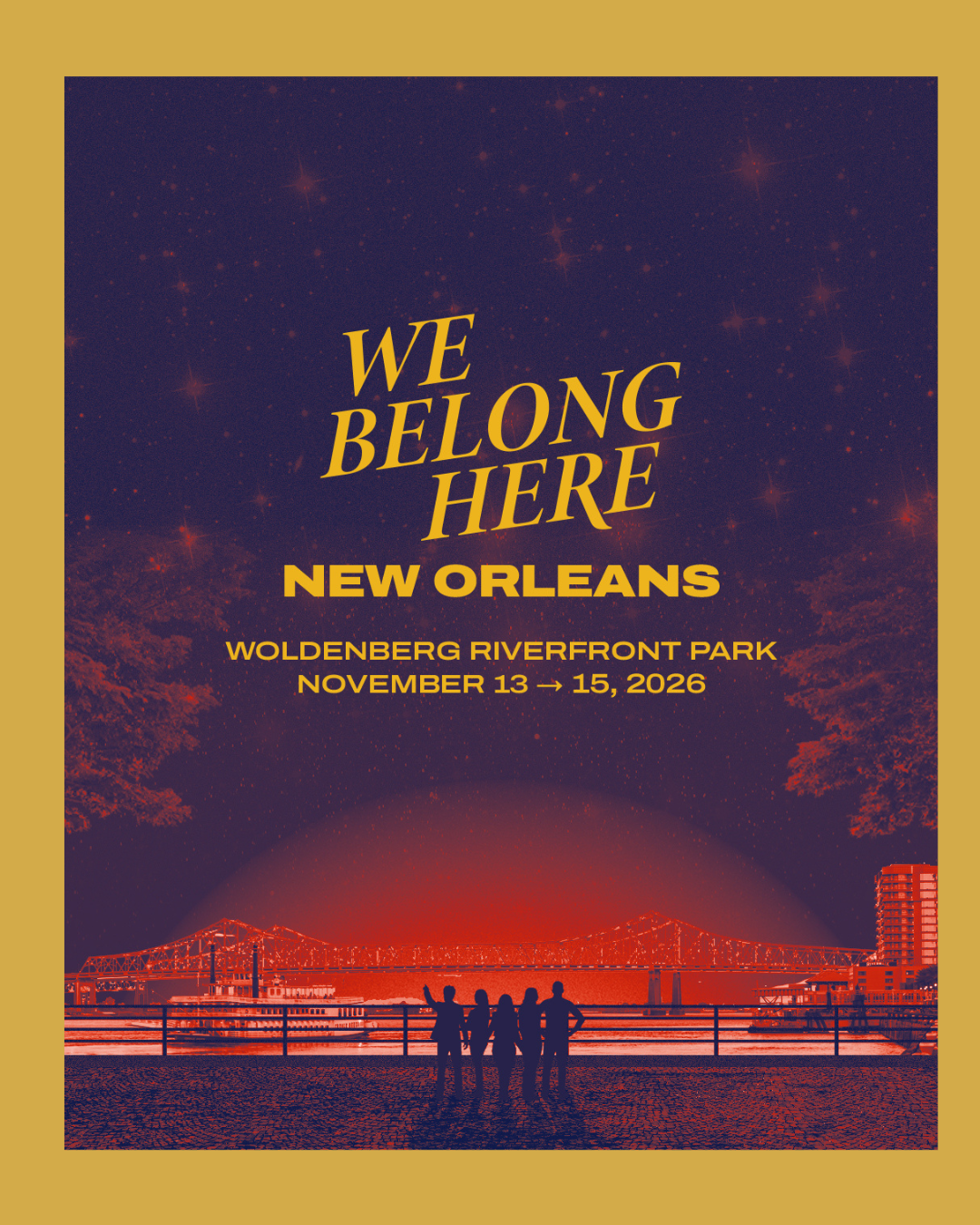
Follow We Blong Here
🌐 Artist Links:
📸 Instagram
📺YouTube
About NOLA EDM:
NOLA EDM is a New Orleans-based music and culture platform dedicated to documenting, promoting, and producing events that highlight the Gulf South’s electronic and underground scenes. Through artist interviews, editorial coverage, and festival production, NOLA EDM connects fans, promoters, and creators shaping the city’s next wave of sound. Follow NOLA EDM on Instagram for weekly event updates, giveaways, and exclusive artist features.